Popular Post

Showing posts with label Buddhist. Show all posts

Buli Tsho

I am sorry it won’t be sensible unless you understand Khengkha. I have requested the caretaker do in Dzongkha, but he felt Khengkha would be the best way to convey. He gave us permission to record and share his messages.

Well here is some parts of oral account on Buli Tsho. Please believe or visit Buli Tsho.

Its believed Buli Tsho was once located in Zhongar present Mongar.  Story tells that Zhongar had a cruel King protected by a mermaid of the Tsho. The King’s sheer cruelty did not please his subject. Dissatisfied with the king's behavior, the people destroyed the environment around the lake, forcing the mermaid to flee. My wife from Mongar endorses the story and beliefs. She complements that Buli Tsho ran or was moved from her village Takchu in Mongar.   

The caretaker explains in a video how the mermaid came to Buli and sought refuge with one of the residents. She was given the central open room but took the altar room instead. The mermaid warned the grandma host not to open nor peek through the doors. The night set off well.

Next day, since she did not show any sign of getting out of the alter room. Curiosity got the better of three grandmas, who peeked and saw her upper half as a human covered in ornaments and her lower half as a snake in the water. Despite the host's defiance, the mermaid left few jewels and a milk churner as a token of gratitude. Some believe that if the host had complied with her request, the house would have been filled with treasures and more.

The caretaker also shares another story about how a local girl became a companion to the Buli Maenmo Tsho and received a dowry in return. Please watch and listen.

For the video please visit Buli Tsho

#BuliTsho #Zhemgang #Zhongar #Mongar #Tsho #Culture


Zhidar Matters- The Rise and Fall of a Controversial 18th Century Bhutanese Ruler- Dorji Penjore

I have read the book over few evenings. Sir Dorji Penjor, author of the book as he does in all his writings, showed us again on the subject many have no or less knowledge but matter in ways. Zhidar Matters is my third book by Sir Dorji. From the book “Dasho Keiji Nishioka: A Japanese Who Lived for Bhutan (2011)” learnt that Nishioka revolutionalized agriculture in Zhemgang. Respectable cultivable farmland (Paddy field) villagers own today back home owes to Dasho’s utter commitment. Lo and behold a mistress of Dasho from my village helped put our farmland on the map. Not flexing, my father through Dasho got a set of farm machines that eased families and got his name Apa in the community. 
Check this: https://dorjipenjore.wordpress.com/dasho-keiji-nishioka-a-japanese-who-lived-for-bhutan/ 

Love, Courtship and Marriage in Rural Bhutan: A Preliminary Ethnography of Wamling Village in Zhemgang (2009): This book talks about the courting of suitors to marriage in Wamling village. Few of the practices revealed in the book are similar to that of most villages in upper Kheng or elsewhere.  

Here is the link: https://dorjipenjore.wordpress.com/love-courtship-and-marriage-in-rural-bhutan/ Friends who borrowed this book of mine please return lah. 

“Zhidar Matters” made the talk of the town. A free distribution that stopped suddenly and reviews did seize the interest of many. I read one-fourth online and the rest on the hardcover. The narration is so impeccable. We can relearn Duars of the south and War with the British in-depth. 

Sympathizing history hero an orphan who rose from pillar to the highest post of the land “Druk Desi” is natural. Zhidar was overthrown and denied home entry in war defeat to the British, and loss of regional powers. His life after War defeats is a mystery. The book doesn’t provide Zhidar’s complete biography, differing theories questions and activates continuity of study from other scholars. 

The British in Bhutan history starts with Zhidar and Cooh Behar. The book gives an account of how Bhutan in the region has political influences over many kingdoms then. The engagement from Bhutan with Tibet, Cooh Behar, Bengal, Nepal, British and other kingdoms is a testament to its stand today. Besides learning the history of relevance, it also provides other enticing historical figures from neighboring countries. I have an online copy of the book.
Thank you Dorji Sir.   

BUMDRA-The 100 Thousand Dakinis

 Here I present you Bumdra my version from what I learnt from my recent hike to the peak of the cemetery. I am hopeful this information could in some way help you or other who innately wishes to climb the palace of 100 thousand Dakinis, link your inner self with Guru Rinpoche and Yeshey Tshogyel and incinerate before natural cessation of your breathe.

The non-soporific dwelling Bumdra connects you spiritually, and strengthen muscles of legs and eyes. The place by virtue and the historical prudence reminds us of our temporal occupation. Also temporal happiness essentials serotonin, dopamine, oxytocin, and endorphins are incredibly generated. Bumdra brew life and moments.

We were told Bumdra could appositely refer to as Tsari Nyipa as it was blessed and sanctified by Guru Rinpoche in 13th Century.  

How to reach the site:

Needless to describe the ambiance of the Bumdra glamping I deviate myself to the site and the History.   I can’t tell the distance between the Sangya Choekhor and Bumdra. Five of us started our hike at 8:39 from the road. By 9:56 we crossed that resting canopy stand. 11:07 we are at lunch spot. Our first sight of the Bumdra temple and camp was at 12:27. It took us 3 hours 48 minutes to hike up to the camp on slow pace. The hike has mix of gentle and steep gradient walk. First hour and half we have sun direct overhead as the trees along the route are burned. Consider cap.  

Bumdra camp & the Temple in frame 

History:

It is believed that Guru Rinpoche in 8th Century from Tibet prophesized the foundation of Bumdra. Narration has it that Guru is said to have stated there is one sacred site in Bhutan whose sacredness is parallel to Duethrue Gawa Tse (Crematory in India). Also he has shown his interest of travelling South in search of the site in the future.

In 13th Century, Guru from Gyem Jango in Drukgyal spotted the site. Khandro Yeshey Tshogyel was into retreat at the present temple site. It is believed that Khandro Yehsey Tshogyel through her supernatural power represented in 100 thousand Dakinis. Disbelieved Guru ordered all the Dakinis to show their existentialism and divinity. The 100 thousands Dakinis responded leaving their right legs’ imprint each on the cliff which are visible today at the temple. So the name Bum Dra, Bum meaning 100 thousand and Dra the Cliff.

There may be other stories like 100 thousand Dakinis frequenting the place. The one I present you is from a Lama who I acquainted over the dinner who had good acquaintances of the Bumdra in general.

As prophesized in 8th century by Guru, Zhabdrung was in Bumdra to further augment the place. However, he could not engage himself in person because of Paro Dzong construction. He passed on to Gyalsey Tenzin Rabgey to take over the task.    

Lam Drapa Jamtso on the direction of Gyalsey Tenzin Rabgey could not lay the foundation of the temple on the cliff. While the work progresses in the day, by dawn the efforts are brought down to the ground either by natural occurrence or evil spirits. 

Then to put an end to the overarching exertions Gyalsey could only build up the foundation by pinning his hair each with the stones. Lam Drapa Jamsto is the Lama resident of the temple located at half way of Bumdra trail.  

The main deity or relic is Dorji Phakmo. Fine droplets of water (Duetsi) are seen drizzling down the foot imprints in rare occasions. Because of the presence of Dorji Phakmo’s holy water below the temple, we were told that there is confusion in people thinking that Yeshey Tshogyel and Dorji Phakmo both spent their time at Bumdra which is not correct. It’s Khandro Yeshey Tshogyel who practiced Dorji Phakmo and set Phakmo’s significant at the site.

Nyes:

Besides temple that house Dorji Phakmo statue, the 100 thousand foot imprints, and Phakmo’s holy water below temple. There are several Nyes around.

Drupche Phochu-Mhochu- further left to the Temple is Drupche with two sources which we did not locate that day. The Drupchu is water source to both temple and the camp site.  

To the right of the temple is Drilbu Dra- for its appearance like a Drilbu. Bumdra Rinpoche’s retreat house is right below the Dra. Next to the Drilbudra there is a drain like canyon which is believed to be the Khandro’s secret path for movement (Tsanglam) during the retreat.

On the front of the Temple, adjacent to the two Chortens is Khandro Pangcho (Khandro’s leisure ground). Performing dance arts at the ground would please non-physical souls residing around and the Gods. Chance we may please Guru Rinpoche himself.  

Duethri at Bumdra:

Bumdra is also known for the open sky burial practice it once championed. It attracts mostly the old and shows past to the young visitors. As we ascend the mountains from the camp site, in less than half an hour is Duethri Sumpa. The chronological ordering of Cremation grounds is opposite. You read third (Sumpa) first and the first (Dangpa) last as we rise up.  The scene is peacocking. Next comes Guru Uzha (the Hat), a small cave for meditation built. One could witness droplets of holy water drizzles down the rock only if we spend more time at the cave with faith and fate. I didn’t carry the holiest faith nor question the obvious science but believed the effort put up.

After Guru Uzha, another wow scene awaits you on the other side of the mountains before Duethri Nyipa. The cascading wide scenes of mountains and valleys are poignantly stunning.  

At around 4150- 4200 meters, the beak of the peak is Duethri Dangpa. If you take straight path along the steep uneven ridge, you are there in 30-40 minutes. There is one stretch where you got to glue glide the path onto rocks while nearing the Duethri Dangpa.   The feelings of on the top, foot leveling skyline mood, sunset and the spectacular 360 view were awe-inspiring and beautiful.

One could also take different path from the Camp site’s right, which is lengthy but easy. Hike to the Duethri Dangpa first and loop down through other two. These Duethris are equally sacred as Jingtsu Ringwa and Tsewa Duethris.

What do you do at Duethri?

It is an end to the physical form in cremation grounds but there you renew in entirety. The lama that knows Facebook and posting pictures in social media that night cushioned my plain thoughts on the limited awareness. He hinted us the obvious defilement process of our body, mind and speech after puberty. So people go there to put an end to the form they think it’s dirty by burning or burial process and renew.  

While we lay on the burial spot, we assume of closing all our openings. The tradition goes that we take Buddha’s parnirvana position and with the help of our right hands we cover the openings. Here is how we do it. Place Thumb on the chick that meets ear bone, use our Index Finger to cover ear, cover Eye by Middle Finger, cover Nose by Ring Finger and Mouth by Little Finger. Slightly deflect left hand palm to cover our but hole. Then the prayers and consider you left the colluded form behind and have new physical form hereon. We should arrange friends to wake up the one laying down with good messages.         

It is meritorious to take up oath of adherence (Kheylang) but not promise (Damcha) after taking renewed life. Simple funeral arrangement in future would suffice the grand funerals to those who made up to the Burial place. It is logical not to pluck one’s own hair and nails to burn. Those who cannot make it to the site could send their hairs and nails for Jingsek.

First Sight 

Durthri Dangpa


Sunset view from Duethri Dangpa

Duethri Dangpa


Duethri Nyipa 

Guru Uzha

Duethri Sumpa view from Duethri Nyipa 


Duethri Sumpa 


khenpo & the Calendar


Kunzang Shedrup Choling Retreat Center 

The time driven event sprees from the last little full stop I put on my university paper are reflections in self-nod but not in forms of any kind. I have become a part of the sum in some erstwhile negligible subject at times, a screen of mockery and inspiration rarely and one cynical bottle of non-spirited wine infrequently.

Khenpos/Lamas/Rinpoches in general runs life in rearing or rendering support to the community/mass while individual gets benefited along. Readers, preserve your odd thinking aside for a while even if you have experienced the bitter sweetness of them or you were victimized once. Do not demean on their spending and curse their driving ability.

Well, the Khenpo I intend to share is my brother Rigzin Wangchuk, who studied in Simtokha then and completed his Buddhist Philosophy in Schechen Monastery in Nepal and Basic English Communication studies from Santa Rosa College in the US. Decade back, he undertook the arduous project of Retreat Center in Kheng Tsheldang, Zhemgang.

I have become part of him along his windows of light; scrolling up and down the scenes, contributing in words and words of mouth, getting favored randomly but seldom, learning varying subjects and objects, filming and documenting his and mine together and off course some financial aid in keeping me running.

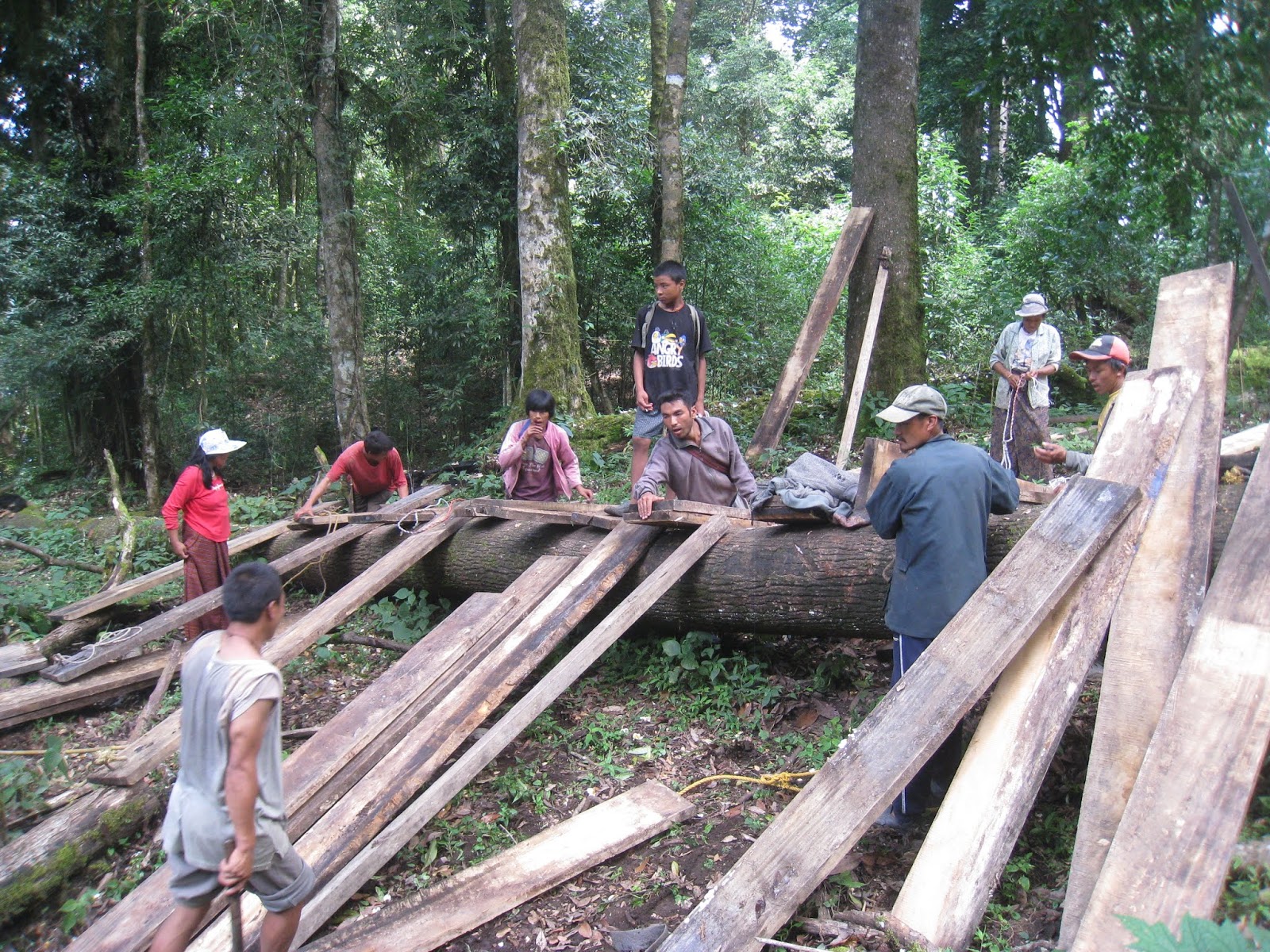
I have noticed many young people from my village who contributed labor in starting phase of the project are in colleges and some started earning. The project took its toll. The prolong attributes to no road connectivity, scarce and long transportation of the raw materials and lagging timely budget. The project is 70 percent structurally complete today. The expenses were harsh on Khenpo. Beneficiaries are scattered. Benefactors are minimal. By default or fault, no direct support of any kind received from L&C Government. There was a time when khenpo had to borrow money and clear up the bills. One good about him I know is not delaying the payment on the work completed. Like any lams in Bhutan, he would not stop complaining and asking for adjustments. 

Now, the warm sun devours gleam at this corner of the secluded place. The main temple and retreat houses propel the existence of Kunzang Shedrup Choling Retreat Center. The vibration of Dharma wheel turning. Khenpo’s bald forehead enhanced. Happiness wrinkles filled up on my old parents. Everyone quenched and comforted to the least.

The Center started the retreat program since 2015; first batch of the practitioners graduated and second batch progressing well. Short retreat program through proper consent and discussion are available for the monks and the Gomchens. The Center got enough space. Monthly stipends are arranged for the main programs, short programs are to consider on case wise. If you would like to become part of the sum, you are welcome to be benefactors (Jinda).

The main temple is in the process of getting its parts fixed; the soft floor marble laid few years ago by Jojo Jowchu from Paro, who dedicated his one year working on concrete and the walls. Kinga Wangchuk did the wood paintings of the inner and outer of the main temple. He continues to paint the statues currently. Jinzo Wangdi from Nayphu, Paro spent years in molding and sculpting statues.  Initially the temple had Guru (7 feet), Kilaya (Phurp- 6feet), Dorji Phakmo (5 feet). Three more statues of 4 feet each (viz. Pema Lingpa, Longchenpa, and Gonpo Manning) are added and installed recently. Shingzo Lopen Lhatu from Gangteng's contribution on wood-work  was commendable. Khenpo is working on the dzungs for the new ones at the Center these days.

Paintings of the statues are ongoing, work progressing well. Summer and the rain are around. The place is warm and humid. The Center intends to plant perennial trees and fruits within the premises. Ideas and information on what could breed best in the area are welcome again.

The major chunk of the budget on the last phase is Wall Paintings, the estimates Khenpo receives from Local wall painting contractors in Bhutan are enormous I was told. I could be negligible subject on this but yes I could document gratitude and report as a story. I could direct you and influence him the helping hands are never to be forgotten. He is a lethal believer of Cause and the Karma, offers the best he could and makes sure he returns the favor as he would like receiving onto.

I have written in the past for him and writing now for the image he built, self-esteem he raised on me and to us the family, shares the virtues he is working non-stop and the hard work he puts up in gathering fund for his project. If you would like to help him in some ways, please get in touch with him. I will help him write Thank you Messages.


You could also check this for similar content & photo comparison.  


Main Temple

Zow Lhatu from Gangteng


L-R: Ap Tshewang ( My dad, Jinzo Wangdi, Tsi-Zo Ap Jochu, Jinzo Assistant, Ugyen Wangda (me)

Vajra-Kilaya

Guru

Dorji Phakmo

Villagers collecting Timber 


First Batch of Retreat Practitioners 

Khenpo with Village kids who have come to contribute labor 


Nangtens


Yongla Goenpa


Incepted as Nyingma Monastery then, the present opulence through Royal Government of Bhutan’s support, Yongla Goenpa stood through times and today outshines the odd history. Reconstruction started in 2012 over 5 years and today’s prominence goes to local Artisans; to name few, painter Lopen Pema Wangdi from Zhemgang and Sculptor Lopen Sangay from Paro.
Officially named Riwo Pelbar Dargeychhoeling Gonpa and widely known as Yongla Gonpa was founded by Khedrup Jigme Kundel on the instructions passed onto him by his Master Rigzin Jigme Lingpa.  It is believed that Yongla Lam Dorji Jamtsho first built the Goenpa in 1736 after a year Khedrup Jigme Kundel passed away. 
The ground floor houses the local deity Dhoenyen Zangpo and Kaley Yongba far inside alter. The shrine named as Droley Lhakhang as it holds within thousands of miniature Dorji Drolo statues with other larger Harsum Maagdhu, Dorji Drolo and Phurbha Lhatshog. The top floor holds Zhabdrung, Guru Rinpoche and Chenrigzee in order.

How to get there?
15Km from Pema Gatshel town towards Samdrup Jongkhar-Trashigang National Highway, Yongla Goenpa bloom post the mountain ridge overlooking valleys of Dungsam. It is half an hour drive to the monastery from Tselingore Junction.  

How it got name Yongla?
The oral tradition has it that Khedrup Jigme Kundel from Darlung Kha in Wang, Thimphu (let me know if anyone knows of the place in Thimphu)  was instructed by his master Rigzin Jigme Lingpa to look for place resembling that of Tsari in Tibet where he was to teach Buddha Dharma. Khedrup Jigme Kundel accompanied by Khandro Dechen Gyalmo travelled from Tibet through Bumthang looking for the place. While they reached the present site, Khedrup Kundel asked Khandro if this is the right place they walk through valleys and mountains. Khandro responded “Yong Yong” (meaning Yes Yes). Thus the name Yongla as it prospers today.

Who were here?
One of Local deities Kaley Yongba, I couldn’t ascertain whether he is (Kaley-Black, Yongba-Stupid or Kaley Yongba -Stupidly Strong). People from Pema Gatshel, please accept my apology and would welcome your comments; good or bad.
I learnt late Lam Sonam Zangpo was here in 1960s and assuming his contributions must be immeasurable. Dujom Rinpoche visited the site in 1970s and the present name of the Dzongkhag Pema Gatshel (meaning: The Blissful Land of the Lotus) was given. What name it would have had known with before? 

What happens there?
The Famous annual Phurbai Drupchen then started during Descending Day of Lord Buddha, with the support from the people’s harvest. However, now it is scheduled during the month of September, more grandeur with support from the State. Pema Gatshel monastic body moves here during the summer while its unfathomable cold on the top in winter keeps them at the Dzongkhag.  

Observations:
The architectural design, structural facilities (Car parking, hostels and washrooms), location, public ground, road from the highway, statues and the mural paintings are awe-inspiring.  The scenes from the top are magnificent during bright day light.  
On the contrary as a usual custom in the religious sites (not all but mostly) in the country, I noticed two caretaker/Koenyer are not well acquainted to the Lhakhang. Three of us were only visitors that moment; I thought I would return a happy man. They didn’t have explanations at all except they told us name of the statues when we requested to say something about it as it was our first.  It wasn’t even about language barrier, they were fluent on Dzongkha.  
It would be good for the temple and the Culture Preservation if we would have well learned caretaker/koenyer in all the religious temples/monasteries/institutions dedicated to the disseminating proper information to the visitors.  

Featured Post

Buli Tsho

I am sorry it won’t be sensible unless you understand Khengkha. I have requested the caretaker do in Dzongkha, but he felt Khengkha would be...